
14 May 2026 · The bench
Screen protector myths: what actually prevents cracked screens
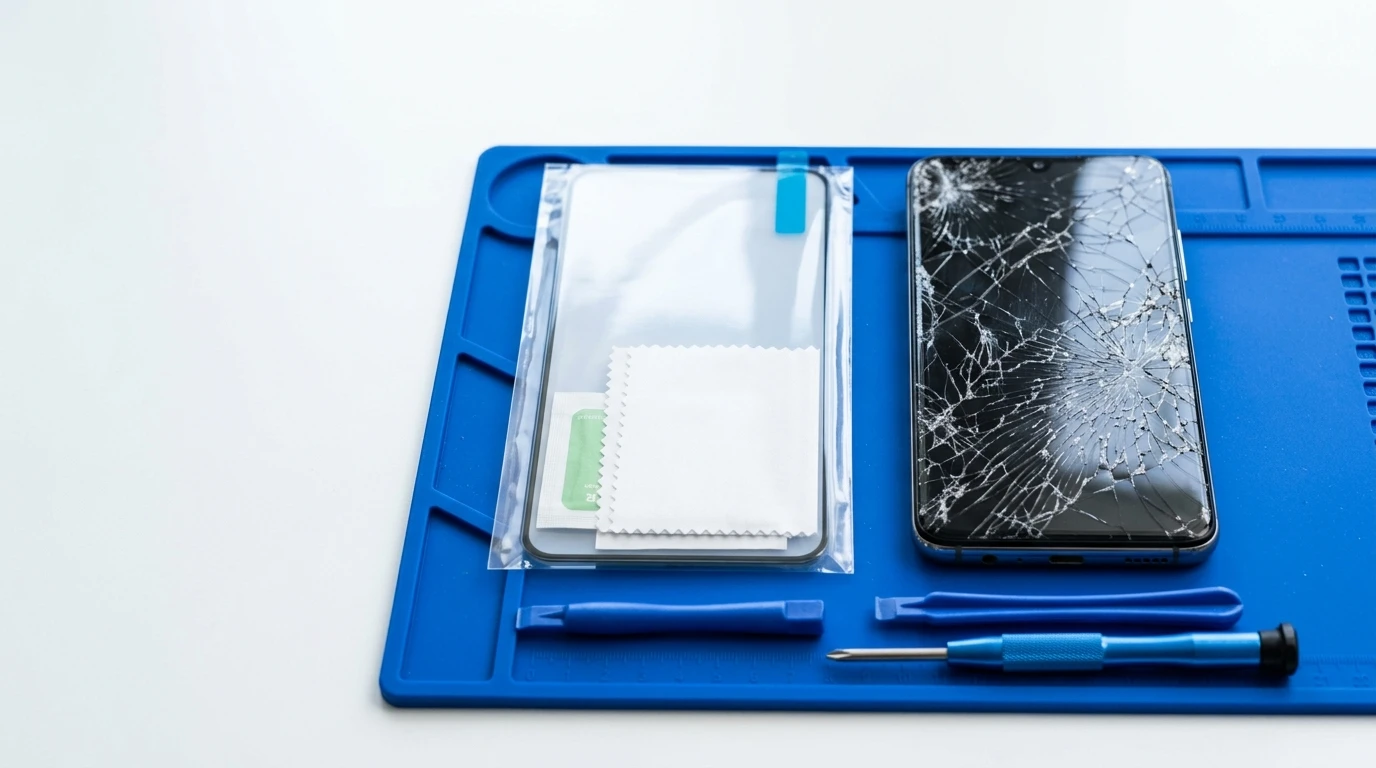
"I had a screen protector on and it still smashed" is something we hear weekly, usually followed by frustration that the protector didn't do its job. It did — screen protectors are there to take the hit on the surface, not to save the glass underneath from a hard enough drop.
Tempered glass genuinely helps with the common failure: a flat drop onto a hard surface, screen-down. The glass protector absorbs and spreads that impact, and often you'll find the protector cracked while the phone underneath is fine. That is the protector doing exactly its job.
What tempered glass does very little for is corner drops and edge impacts — which, from what we see on the bench, cause the majority of the screens we actually replace. A drop that lands on a corner concentrates force in a small area, and no thin glass layer on the front face changes that physics.
The single biggest factor we see isn't the protector at all — it's a case with a raised lip that sits proud of the screen by a millimetre or two, so the glass never touches the ground directly on a flat drop. Combine that with tempered glass and you've covered both common failure modes reasonably well.
Plastic film protectors are mostly there to stop scratches and fingerprint wear, not impact — worth having, but don't expect them to save a screen in a real drop. If budget allows one upgrade, a proper case beats a better screen protector every time.
Got the same problem?
Book a free diagnosis and we'll give you a written quote before any work starts.
Book a repair